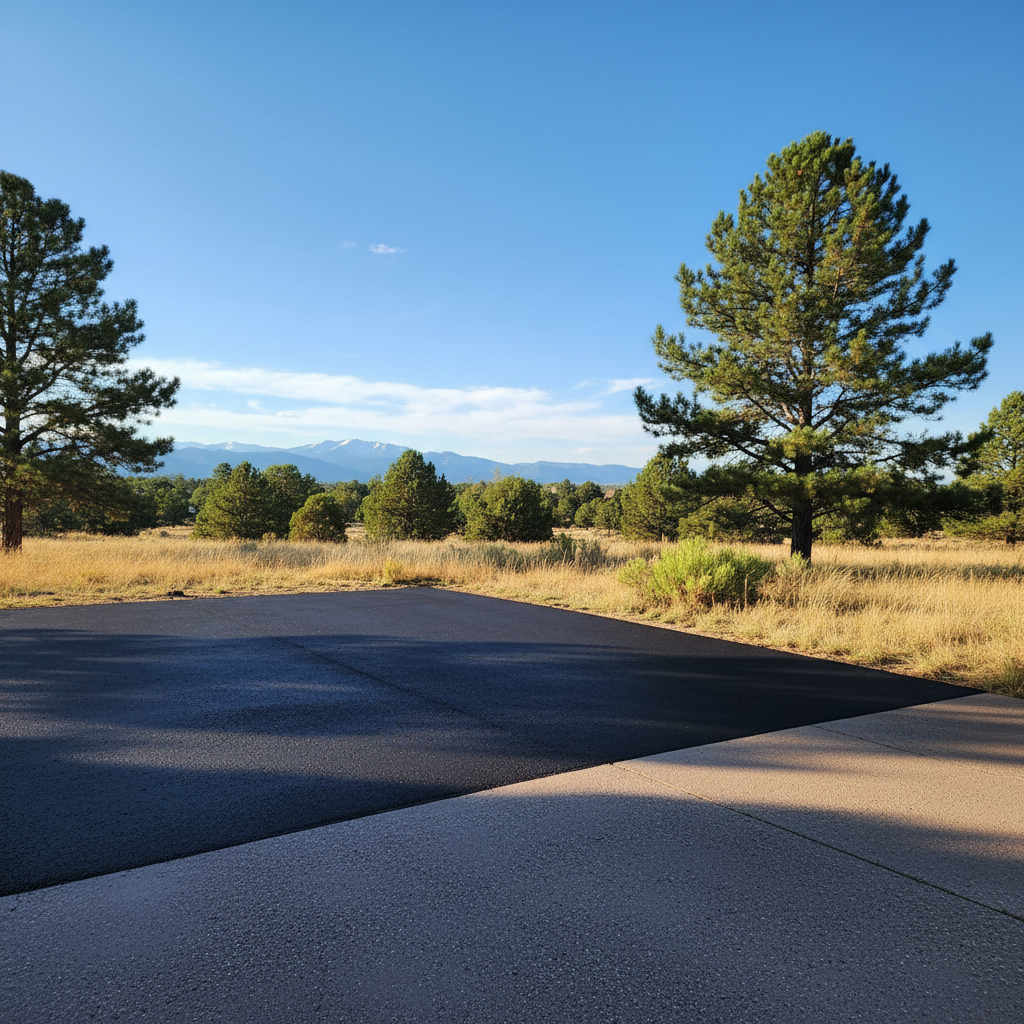
Alright, let us talk about Asphalt Patching. You have had a pothole fixed, or maybe a cracked section repaired. Now you are wondering how to keep that patch from becoming another problem spot. Especially here in Aurora, with our wild temperature swings and those notorious freeze-thaw cycles, taking care of your patched asphalt is important.
Make Those Patches Last Longer in Colorado's Climate
You want your Asphalt Patches to hold up. The key is understanding what they are up against, especially here in Aurora, Colorado. Colorado's climate is tough on pavement. We get intense summer heat that can soften asphalt. Then we have brutal winters with freezing temperatures that make it brittle and prone to cracking. Those freeze-thaw cycles are the real enemy for your Asphalt Patching. They let water seep into tiny cracks, freeze, expand, and then turn a small issue into a big one fast.
- Keep it Clean: Dirt, debris, and leaves can trap moisture on your asphalt. Regularly sweeping or blowing these off helps prevent water from sitting on the surface. This is important, especially before winter.
- Address Drainage: Standing water is a big problem for Asphalt Patching. If water pools on or near your patched areas, it is going to find its way underneath and start eroding the base. Make sure your gutters are clear as well as direct water away from paved surfaces. If you have persistent pooling, you might have a bigger drainage issue that needs looking at.
- Seal it Up (When Appropriate): While not directly for the patch itself, sealcoating your entire asphalt surface can protect it from UV rays as well as water. This helps prevent new cracks from forming around the patch. It is like sunscreen for your driveway. Just make sure the patch has fully cured before sealcoating.
- Mind the Weight: Heavy vehicles can stress patched areas. This is especially true in winter when the asphalt is more vulnerable. Try to avoid parking heavy loads on weak or newly repaired sections.
Regular Maintenance: Your Pavement's Best Friend
Think of regular maintenance as preventative medicine for your asphalt. It is much cheaper to catch small problems early than to deal with a full-blown pavement failure. We always tell folks to do a quick walk-around of their property after a heavy rain or during the first warm week of summer here in Aurora. This helps with good Asphalt Patching maintenance.
- Visual Inspections: Look for new cracks. This is especially true around the edges of existing patches. Check for any areas where water is consistently pooling.
- Crack Sealing: If you see new cracks forming, even small ones like a quarter-inch wide, get them sealed. Water is the number one enemy of asphalt. Crack sealing stops it from getting into the sub-base and causing bigger headaches. You can do some minor crack sealing yourself with cold-pour products. For anything wider or deeper, you will want a professional for your Asphalt Patching.
- Clean Up Spills: Oil, gas, or other chemical spills can break down asphalt. Clean them up quickly to prevent further damage.
Warning Signs You Have Got a Problem
Your asphalt will tell you when it is hurting. You just need to know what to listen for. Ignoring these signs means a small repair can quickly become a much bigger, more expensive job for your Asphalt Patching in Aurora.
- Alligator Cracking: This looks like a series of interconnected cracks. It is much like an alligator's skin. This is a serious sign that the asphalt's foundation is failing. This often happens due to water getting underneath.
- Potholes Returning: If an Asphalt Patch keeps failing in the same spot, or new potholes form nearby, it often points to an underlying issue with the base or drainage.
- Soft or Spongy Areas: If sections of your asphalt feel soft or spongy, especially on a hot day, the base might be saturated with water. The asphalt may also have weakened significantly.
- Sinking or Depressions: Areas where the pavement has sunken in, even after rain, indicate a potential base failure.
- Faded, Gray Surface: Some fading is normal over time. A significantly gray and brittle surface means the asphalt is oxidizing as well as losing its flexibility. This makes it more prone to cracking.
- Crumbling Edges: The edges of your driveway or patched areas are often the weakest spots. If they are crumbling, it could be due to poor drainage, erosion, or vehicles driving off the side.
When to Call a Professional (That is Us, Aurora Asphalt & Paving)
We are all for DIY when it makes sense. Some things are best left to the professionals, especially with Aurora's challenging conditions. Aurora Asphalt & Paving is here to help with your Asphalt Patching needs.
- Widespread Cracking or Alligator Cracks: If you are seeing extensive alligator cracking, that is a clear sign the problem is deeper than the surface. We will need to assess the sub-base as well as likely do a full-depth patch or more extensive repair.
- Recurring Potholes: If you have patched a pothole yourself and it keeps coming back, there is an underlying issue that needs expert diagnosis.
- Poor Drainage Issues: If you have standing water that does not go away, or areas that are consistently soft, it is time for us to come take a look. We can identify and fix the root cause, preventing future damage to your Asphalt Patching.
- Large or Deep Cracks: Cracks over an inch wide or deep usually require professional saw-cut patching. This makes sure there is a lasting repair.
- Heaving or Buckling: If your asphalt is looking wavy or uneven, it could be shifting soil, tree roots, or a compromised base. These are not surface fixes.
We understand Aurora's varied soil types as well as the impact of our high-desert climate on asphalt surfaces. This is true whether it is near Buckley Space Force Base or down in Southlands. We use quality materials as well as proper compaction to make sure our Asphalt Patches are durable. Our patches also blend in as much as possible. Do not let a small Asphalt Patching problem turn into a full-blown paving nightmare. Give Aurora Asphalt & Paving a call. We will help you keep your pavement in top shape.